
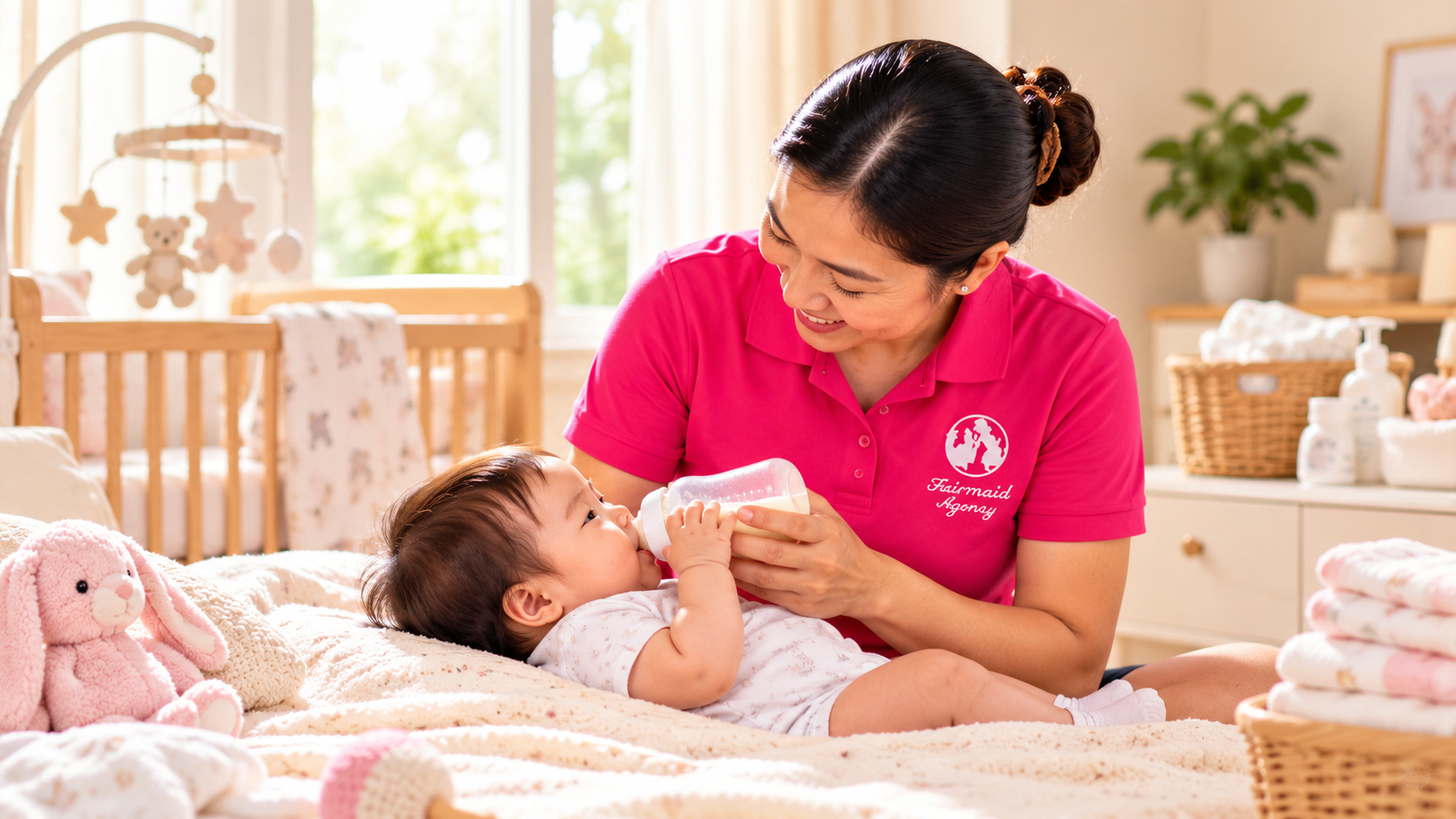
Hiring a maid to help with a baby is a decision most parents take seriously.
Once you have a newborn at home, you quickly realise how much of the day revolves around feeding, bathing, changing, washing bottles, doing laundry and getting the baby to sleep.
If both parents are working, having the right person at home can make a significant difference to how the household runs.
This is also why choosing a helper for infant care requires more thought than simply looking for someone who has worked as a maid before.
You want to know whether she has actually cared for a baby, what she was responsible for in her previous household and how comfortable she is with the demands of looking after an infant.
Experience matters, but it is not the only thing to consider. Her patience, communication, willingness to follow instructions and ability to work within your family's routine are equally important.
Start With What Your Baby Actually Needs
Before you start looking at helper profiles, think about what you will need help with once she joins your household.
Every family has a different routine, and the type of support you need when you have a newborn might be quite different from another family with a six-month-old baby.
You might need someone who is comfortable preparing bottles, washing and sterilising feeding equipment, changing diapers, bathing the baby, doing baby laundry and keeping the nursery organised.
If you are returning to work, the helper might also be responsible for looking after the baby during the day while you are away.
Some families also expect the helper to prepare meals for the rest of the household and manage general housework. If this is part of the role, it is worth discussing how these responsibilities will fit around the baby's needs.
Once you are clear about what you actually need, you will have a much better idea of the experience you should look for.
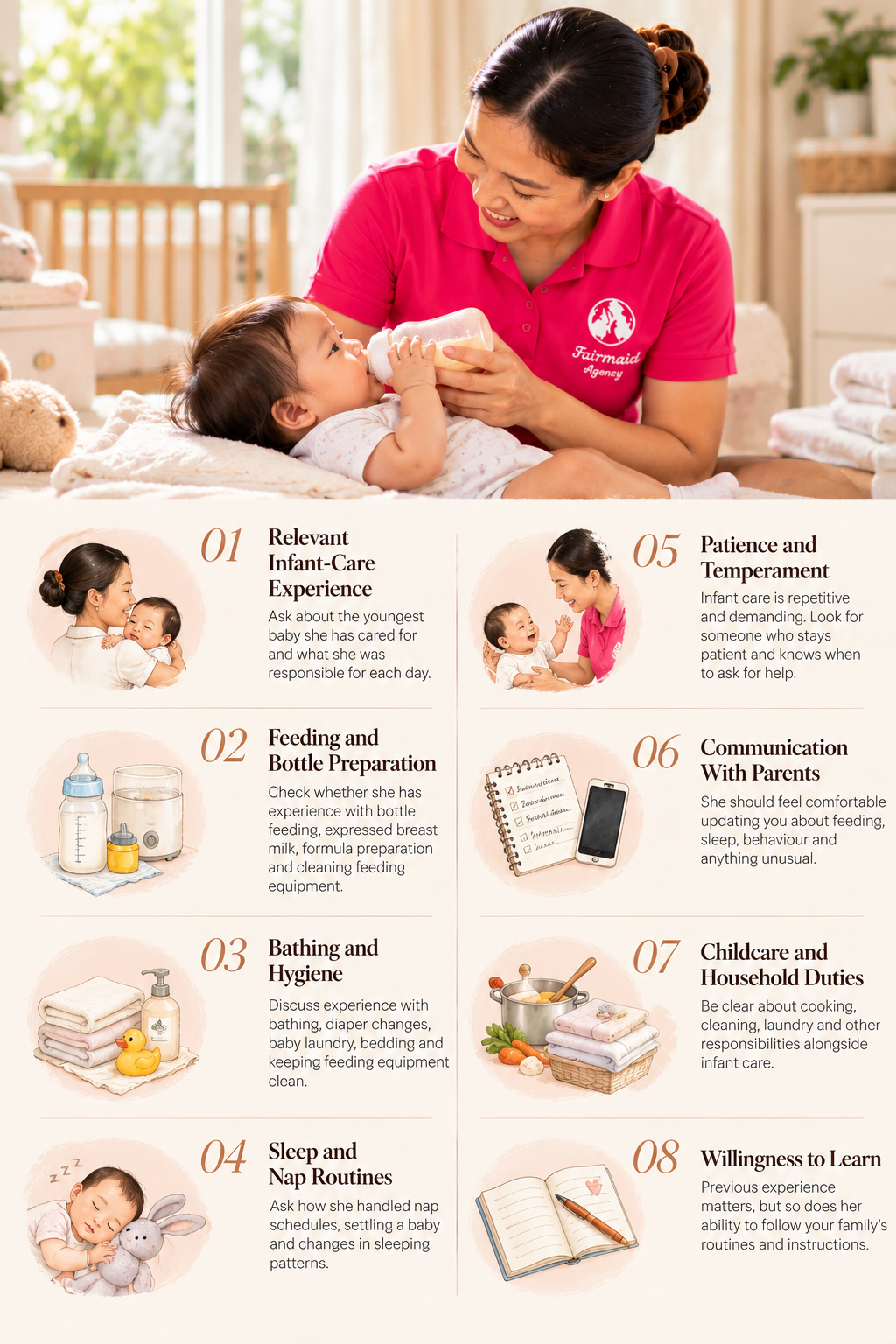
Ask About Her Actual Infant-Care Experience
One of the first things I would ask during an interview is whether the helper has cared for a baby before, but I would not stop at a simple yes or no.
Ask her to tell you about the baby she looked after, how old the baby was and what her responsibilities were on a normal day.
There is a difference between occasionally helping with a baby in a household and being responsible for the baby's daily care.
Find out whether she prepared milk, handled bottle feeding, bathed the baby, changed diapers, managed nap times and looked after the baby when the parents were working.
Ask how long she stayed with the family and whether she was the main person caring for the baby.
The more specific you are with your questions, the easier it becomes to understand what she has actually
experienced.
Newborn Experience Is Different From Looking After an Older Baby
If you are expecting a newborn, ask specifically about her experience with babies in their first few months.
Newborns have frequent feeding and changing routines, and their sleeping patterns can change from week to week.
Parents are often still finding their own rhythm during this period, so the helper needs to be comfortable following instructions and adapting as the baby grows.
Ask about the youngest baby she has cared for and what her daily responsibilities were. If she tells you she looked after a baby who was several months old, ask what she was doing during that period rather than assuming her experience covers newborn care.
This gives you a much clearer picture of whether her previous work is relevant to your situation.
Feeding and Bottle Preparation
Feeding is one of the areas where parents usually want their helper to be careful and consistent.
If your baby is bottle-fed, discuss whether the helper has experience preparing bottles and cleaning feeding equipment. If you are expressing breast milk, explain how you expect expressed milk to be stored and handled. If your baby is formula-fed, explain your usual preparation routine.
You do not need someone who insists on doing things the way she did them in her previous household. You need someone who is willing to learn how you want things done in your home and follow your instructions carefully.
The same applies when your baby starts eating solids. If the helper will eventually prepare food for the baby, discuss her cooking experience and whether she has prepared meals for young children before.
Bathing, Diaper Changes and Daily Hygiene
Infant care involves many small tasks throughout the day, and these are often the responsibilities that make up most of the helper's routine.
Ask whether she has experience bathing babies, changing diapers, dressing them and keeping their belongings clean. Find out whether she handled baby laundry and bedding in her previous employment.
It is also worth asking how she kept the baby's room and feeding equipment clean.
You are not looking for a rehearsed answer. You want to understand whether these responsibilities are familiar to her.
When she joins your household, you will still need to show her your preferred way of doing things. Every family has different routines, and a previous employer may have had completely different arrangements.
How Does She Handle a Crying Baby?
This is one of the questions I would include in an infant-care interview because it gives you a good idea of how the helper approaches a situation when things become difficult.
Ask her what she did when a baby in her previous household would not stop crying. Find out how she tried to work out whether the baby was hungry, tired, uncomfortable or simply needed attention.
You could also ask what she would do if she could not figure out why the baby was crying.
There is no need to look for a perfect answer. What matters is whether she remains calm, understands when to seek help and is willing to follow the parents' instructions rather than relying entirely on her own assumptions.
Sleep and Nap Routines
Sleep is another area worth discussing before you hire.
Ask whether she has previously followed a baby's nap routine and how she handled a baby who had difficulty settling. If your family already has a routine you intend to follow, explain it during the interview.
Some parents have specific preferences around where the baby sleeps, how the baby is settled and when naps take place. Your helper should understand these expectations from the beginning.
If you are hiring someone with previous infant-care experience, ask her to describe the baby's sleeping routine in her previous household. This often tells you more about her actual experience than a general statement about having cared for babies.
Patience Matters More Than People Think
Looking after an infant is repetitive work, and there are days when the baby does not follow the routine at all. A baby might refuse a feed, wake repeatedly or become unsettled for reasons nobody can immediately work out.
This is where temperament matters.
During the interview, listen to how the helper talks about her previous childcare work. Ask what she enjoyed about caring for babies and what she found difficult.
You are looking for someone who understands that infant care requires patience and consistency. You also want someone who is comfortable asking for help when she is unsure rather than pretending she knows what to do.
Communication With Parents Is Important
When someone else is looking after your baby, communication becomes part of the care itself.
You need to know whether the baby has eaten, when the baby slept, whether the baby seemed unsettled and whether anything unusual happened during the day. If the baby is unwell, you need the helper to tell you clearly what she noticed.
During the interview, ask how she communicated with her previous employer about the baby.
You could ask what she would do if she noticed the baby was behaving differently or if she was unsure about something. Her answer will tell you whether she is comfortable keeping the parents informed.
This becomes particularly important when both parents are working and the helper spends a significant part of the day alone with the baby.
Cooking and Baby Food
As your baby grows, food preparation might become another part of the helper's responsibilities.
Ask whether she has experience preparing meals for babies or young children and what type of food she has cooked before.
If your family has specific preferences about ingredients, seasoning or meal preparation, explain them during the interview.
It is much easier to discuss these things before employment begins than to discover later that both sides had different expectations.
Managing Baby Care Alongside Housework
This is one area where employers should be realistic.
A helper who is responsible for an infant cannot always complete every household chore at the same time. If the baby needs attention throughout the morning, for example, there might be less time available for cleaning during those hours.
Talk through the priorities with the helper.
If childcare is the main responsibility, make sure she understands which household duties still need to be completed and when you expect them to be done. If cooking, laundry and cleaning are also important parts of the role, explain how the household normally operates.
This gives the helper a more accurate picture of the job and gives you a better opportunity to find someone who is comfortable with the workload.
Questions to Ask During an Infant-Care Interview
When interviewing a potential helper, ask questions based on the actual needs of your family rather than relying on general questions about whether she likes children.
You could ask her to describe the youngest baby she has cared for and what her responsibilities were each day.
Ask whether she prepared milk, handled bottle feeding, bathed the baby, changed diapers, managed nap times and looked after the baby when the parents were not at home.
It is also useful to ask what she did when the baby was crying, refused a feed or became unwell, and how she communicated these situations to her previous employer.
If you have other children, ask whether she has experience managing more than one child at a time. If she will also be cooking and cleaning, discuss those responsibilities openly rather than treating them as separate from the childcare role.
Most importantly, give her a chance to ask questions about your family.
A good interview should be a conversation rather than a test. You are trying to understand whether she suits your household, while she also needs to understand what you expect from her.
Experienced Helper or Someone Willing to Learn?
There is no rule saying every family with a baby needs to hire the most experienced infant-care helper available.
Previous experience is valuable, particularly when you have a newborn and want someone who is already familiar with the practical demands of infant care.
At the same time, a helper who has less experience might still be a good fit if she is patient, willing to learn and comfortable following your instructions.
The more important question is whether her experience matches the level of care your baby requires and whether you are comfortable with the amount of guidance she will need.
If you are looking for someone with specific newborn experience, say so from the beginning. If you are open to training a helper who has good childcare experience with older babies or young children, make this clear too.
Be Honest About Your Household
One of the best ways to avoid problems after hiring is to be completely honest about the job during the interview.
If you have a newborn and two older children, explain it. If the helper will also be cooking for the family, doing laundry and cleaning the home, explain those responsibilities. If you have pets, elderly parents or regular family commitments, these should also be discussed.
The helper should know what she is agreeing to before she starts work.
At the same time, listen to what she tells you about her own experience and comfort level.
If she has never cared for a newborn but has several years of experience with school-going children, you need to decide whether her background fits what your family needs.
Finding a Maid for Infant Care in Singapore
At Fairmaid Agency, we understand why families take extra care when choosing a helper for infant care. When someone is going to spend a large part of the day looking after your baby, you want to understand her experience and know what she is comfortable doing before making a decision.
We take the time to understand the family first, including the age of the children, the level of childcare required and the household responsibilities involved. From there, we help families look at helpers whose experience is relevant to what they actually need.
A helper who has cared for a newborn, for example, might be suitable for one family, while another family might need someone with broader childcare and household experience.
If you are looking for a maid for infant care in Singapore, speak to Fairmaid Agency about your family's needs and the type of experience you are looking for.
Taking a little more time during the selection process gives you a better opportunity to find a helper who is comfortable with your baby's routine and able to settle into your household.
Frequently Asked Questions
What experience should a maid have to care for a baby?
Look for experience with babies of a similar age and ask about the actual responsibilities she handled. Feeding, bottle preparation, bathing, diaper changes, sleep routines and communication with parents are useful areas to discuss during the interview.
Should I hire a maid with newborn experience?
If you have a newborn, previous newborn-care experience is useful because the helper is more likely to be familiar with the practical routines involved.
Ask how young the baby was, how long she cared for the baby and what responsibilities she handled rather than relying on the general claim that she has childcare experience.
What questions should I ask a maid about infant care?
Ask her to describe the youngest baby she has cared for and what she did each day. Discuss feeding, bottle preparation, bathing, diaper changes, sleep routines, handling a crying baby and what she did when the baby was unwell. Asking for examples from previous employment gives you a better understanding of her experience.
Can a maid care for a baby and manage household chores?
Many domestic helpers handle both childcare and household responsibilities, but the family should discuss the workload clearly before employment begins. If the baby requires close attention throughout the day, employers should also consider which household duties need to take priority.
What should I look for besides infant-care experience?
Pay attention to the helper's patience, communication, willingness to learn and comfort with following the parents' instructions. Previous experience is important, but her overall suitability for your family and the specific responsibilities involved should also be considered.
How do I find a maid for infant care in Singapore?
Start by working out what your baby needs and what other household responsibilities the helper will have. When interviewing candidates, ask about their actual infant-care experience and discuss your family's daily routine in detail.
Fairmaid Agency can also help families identify suitable helpers based on their household requirements and the experience needed.