
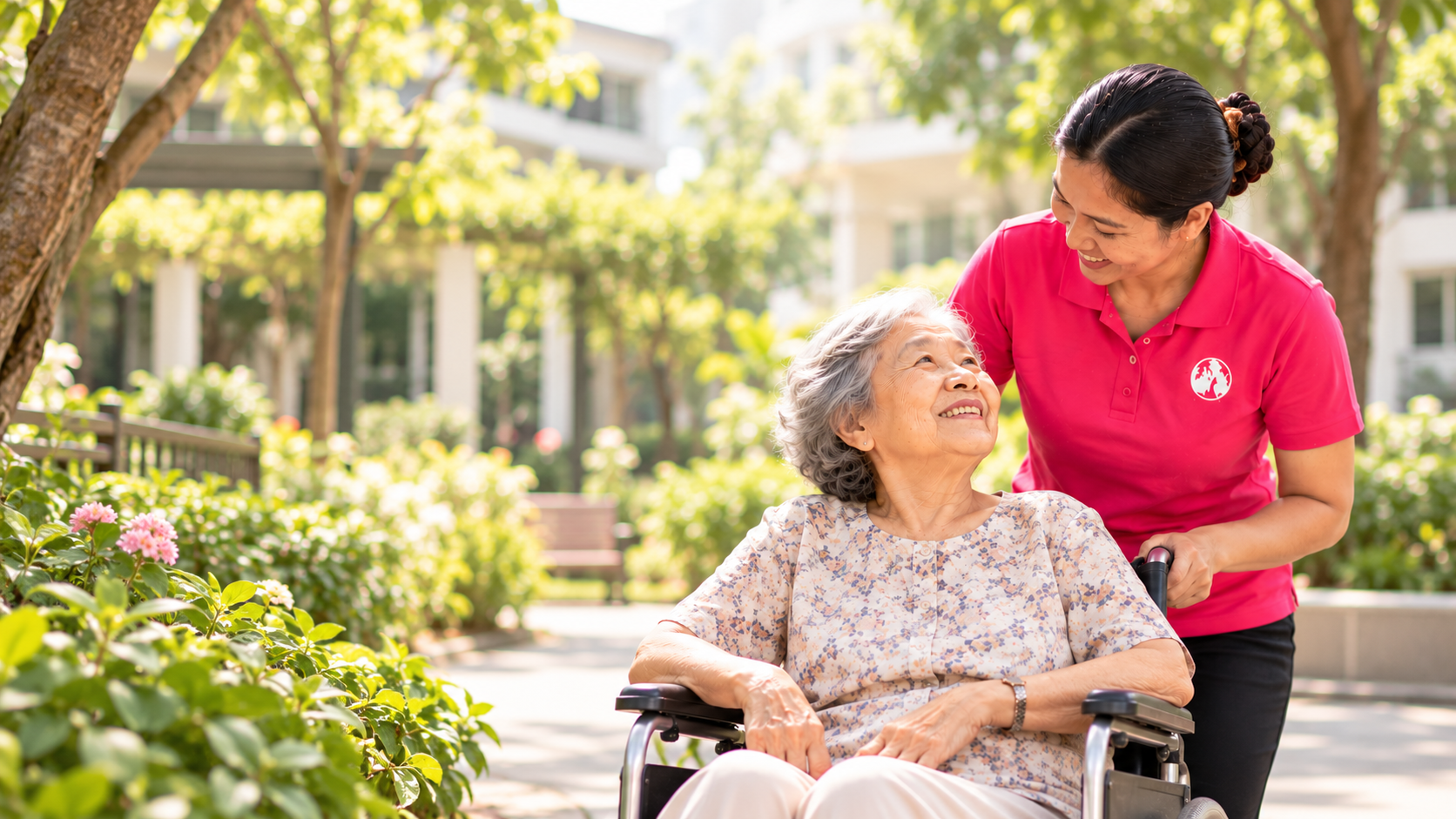
Finding a maid to care for an elderly parent is different from hiring someone to manage household chores.
When an elderly family member needs daily support, you are bringing someone into the home who will spend a lot of time with a person who might need patience, understanding and consistent care.
For many Singapore families, the decision becomes more important when an elderly parent starts having difficulty walking, preparing meals, bathing, taking medication on time or managing daily routines independently.
The right domestic helper needs to fit into the household while also being comfortable caring for an older person. Her previous experience, personality, communication style and ability to manage daily responsibilities all matter.
Here are some of the things to look for when hiring a maid for elderly care in Singapore.
What Does Elderly Care Involve?
Elderly care looks different from one household to another.
Some elderly parents remain independent and mainly need companionship, help with cooking and household chores. Others need more hands-on support with bathing, dressing, mobility or meals.
Before looking at maid profiles, think about what your parent needs help with on a normal day.
This might include:
• Preparing meals and drinks
• Helping with bathing and dressing
• Assisting with walking around the home
• Accompanying the elderly person to medical appointments
• Reminding them about their daily medication
• Helping with household chores
• Preparing a comfortable sleeping environment
• Providing companionship
• Accompanying them for walks or outdoor activities
• Helping them maintain their usual daily routine
It is useful to be specific. Saying you need someone who is “good with elderly” does not tell you enough about the type of care involved.
If your parent needs help with mobility, for example, look for someone who has previous experience supporting an elderly person with similar needs.
Look at Her Previous Elderly Care Experience
Previous experience is one of the first things to discuss during the hiring process.
Ask where she worked, how long she stayed with the family and what responsibilities she had.
A helper who has worked with an elderly person in Singapore might already understand the practical side of caring for an older person in a local household.
Ask about things such as:
• Whether she cared for someone who was mobile or wheelchair-bound
• Whether she helped with bathing and dressing
• Whether she prepared meals for an elderly person
• Whether she accompanied the person to appointments
• Whether she helped with walking or transfers
• Whether she provided companionship
• Whether she looked after an elderly person who required closer supervision
Previous experience gives you useful information, but it should not be the only factor.
Someone with less elderly-care experience might still have the patience, temperament and willingness to learn that your family needs.
Consider Your Parent's Personality
This part is often overlooked.
Your parent and the helper will spend a lot of time together, so personality matters.
Some elderly parents enjoy conversation and prefer having someone around throughout the day. Others are more private and prefer a helper who gives them space.
Some are particular about how meals are prepared. Others have strong routines around sleeping, meals, exercise or household arrangements.
Think about your parent's personality before interviewing candidates.
If your mother enjoys going downstairs for a morning walk, for example, look for someone who is comfortable accompanying her outdoors.
If your father prefers quiet mornings and spends time reading the newspaper, someone who understands his routine might be a better fit.
The household needs to work for both people.
Communication Is Important
Communication becomes especially important when caring for an elderly person.
Your helper needs to understand your parent's requests and recognise when something feels different from their usual behaviour.
She also needs to communicate with the family.
During the interview, pay attention to how she explains her previous work. Does she understand the responsibilities involved? Does she listen carefully when you describe your parent's routine?
For families where the elderly parent speaks mainly Mandarin, dialect or another language, communication should also form part of your consideration.
Language ability does not need to be the first thing you look at, but it becomes important if your parent struggles to communicate comfortably in English.
Look for Patience and Temperament
Elderly care requires patience.
An older person might take longer to get ready, walk more slowly or repeat the same questions. Some elderly people also become frustrated when they lose independence.
The helper needs to handle these situations calmly.
During an interview, ask about situations she has experienced with previous elderly employers.
For example:
“How did you help your previous employer when she did not want to eat?”
“What did you do when your elderly employer refused to take a bath?”
“How did you handle it when your employer was upset?”
The answers give you more insight into her experience than simply asking whether she likes elderly people.
Ask About Mobility and Physical Care
If your parent has mobility issues, be clear about what the helper needs to do.
There is a significant difference between accompanying an elderly person on a walk and assisting someone who needs help getting in and out of bed.
If your parent uses a wheelchair, walking frame or other mobility aid, discuss this during the interview.
If lifting or transferring is involved, explain the routine clearly and find out whether the helper has handled similar responsibilities before.
Do not assume every helper with elderly-care experience has experience with the same level of physical care.
Cooking for an Elderly Parent
Food is another important consideration.
Older people often have specific dietary preferences or restrictions. Some need softer food. Others follow a lower-salt diet or have meals prepared in a particular way.
Ask about the helper's cooking experience.
Find out what she cooked for her previous employer and whether she is comfortable preparing meals according to instructions.
If your parent has a familiar diet or favourite dishes, discuss this early in the hiring process.
A helper who is comfortable cooking the type of food your parent eats regularly will have an easier time settling into the household.
Think About Companionship Too
Elderly care is not always about physical assistance.
For an elderly parent who spends much of the day at home, companionship often becomes an important part of the helper's role.
The helper might sit with them during meals, accompany them downstairs, go for a walk or talk with them during the day.
This is where personality becomes important again.
A helper who is warm, patient and comfortable spending time with an older person might suit a family better than someone whose experience is mainly focused on household chores.
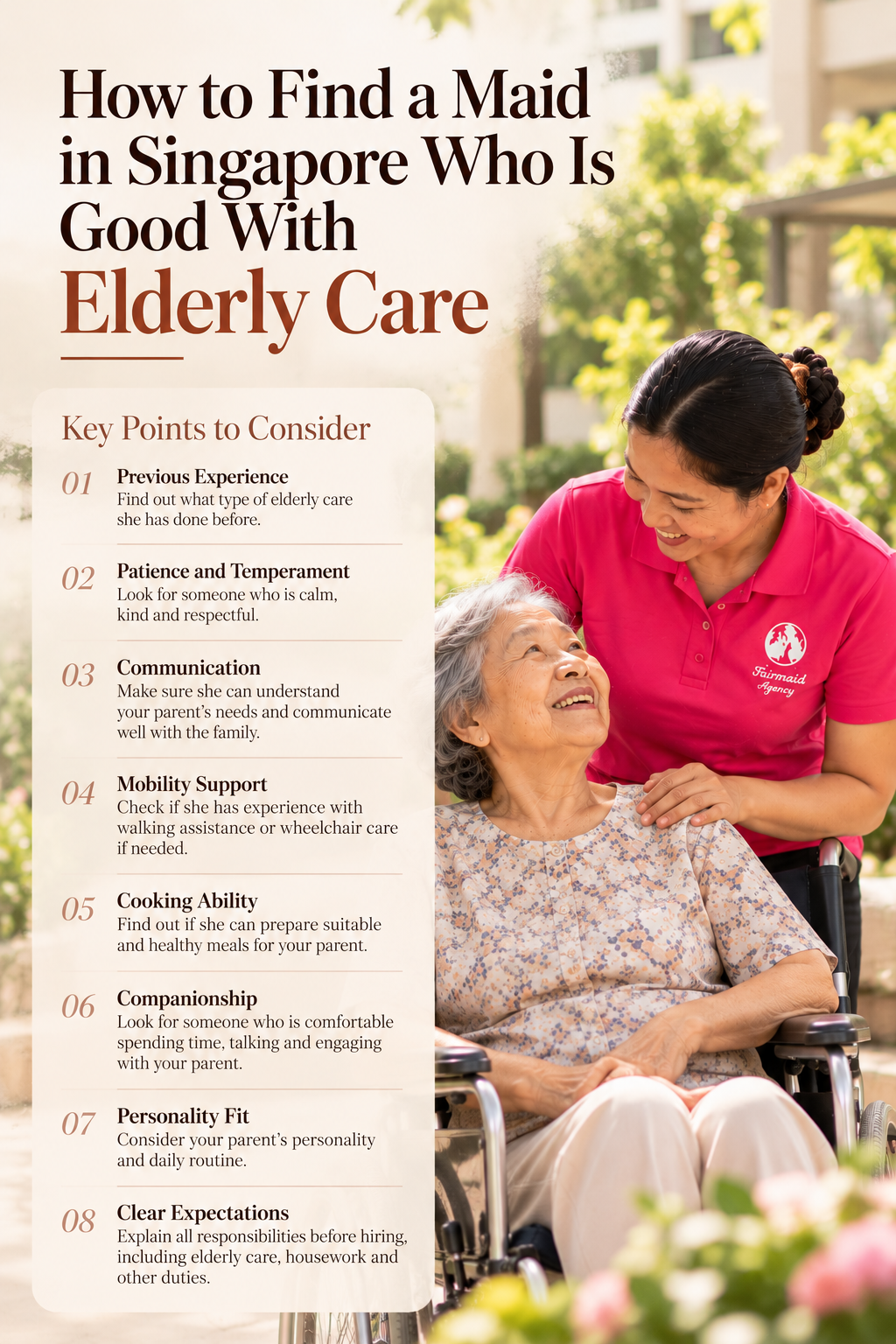
Be Clear About the Job Before Hiring
Many problems between employers and helpers start because both sides had different expectations from the beginning.
Before hiring, explain the actual duties involved.
If the helper will be responsible for an elderly parent as well as the household, discuss how her day might look.
For example, she might need to prepare breakfast, help your parent get ready, clean the home, prepare lunch, accompany your parent outside and prepare dinner.
If there are other family members, children or pets in the household, explain their routines too.
The more clearly you explain the household, the easier it becomes to find someone who is comfortable with the role.
Should You Hire an Experienced Elderly Care Helper?
Experience is useful, especially when your parent requires more hands-on care.
An experienced helper might already know how to manage common routines and feel more confident around elderly employers.
At the same time, experience alone does not guarantee a good match.
A helper might have several years of elderly-care experience but still struggle with the personality or routine of a particular household.
For a relatively independent elderly parent, a helper with general household experience and a caring personality might be suitable.
For someone who needs more physical assistance, previous elderly-care experience should carry more weight during the selection process.
Interviewing a Maid for Elderly Care
When interviewing candidates, move beyond general questions about housekeeping.
Ask questions related to your parent's actual needs.
You might ask:
• Have you cared for an elderly person before?
• What were your responsibilities?
• Did your employer need help with bathing or dressing?
• Did you assist with walking or wheelchair use?
• Did you prepare meals for your elderly employer?
• Did you accompany your employer to appointments?
• What did you do when your employer was upset or difficult?
• How did you spend time with your elderly employer during the day?
• What type of elderly care do you feel comfortable doing?
• What did you learn from your previous elderly-care experience?
Then explain your parent's routine and ask whether she feels comfortable with the responsibilities.
Watch how she responds. Her attitude and willingness to understand the role often tell you as much as her employment history.
Finding the Right Maid for Your Elderly Parent
At Fairmaid Agency, we believe elderly care starts with understanding the family.
Every household has different needs. Some families need a helper who is experienced with mobility support. Others need someone who is mainly responsible for cooking, companionship and household duties.
We look at the family's requirements, the helper's experience and the type of household she will be joining.
The goal is to introduce candidates who are suitable for the role and allow the family to make an informed decision.
For families hiring a domestic helper for elderly care, taking time to explain your parent's needs before selecting a candidate often makes the entire process smoother.
If you are looking for a maid for elderly care in Singapore, speak to Fairmaid Agency about your family's requirements and the type of helper you are looking for.
Frequently Asked Questions
What type of maid is suitable for elderly care?
Look for someone with relevant experience, patience, good communication and a personality suited to your elderly parent's needs. The level of experience required depends on how much assistance your parent needs.
Should I hire a maid with previous elderly-care experience?
Previous experience is useful, especially if your parent needs help with mobility, bathing, dressing or other personal care. For an independent elderly person, general household experience combined with the right personality might also be suitable.
Can a maid care for an elderly parent and manage household chores?
Yes, many domestic helpers handle both elderly care and household responsibilities. The duties should be discussed clearly before hiring so both the employer and helper understand the expectations.
What should I ask during an elderly-care maid interview?
Ask about previous elderly-care experience, mobility assistance, bathing, meal preparation, companionship, medical appointments and how she handled difficult situations with previous elderly employers.
How do I find a maid for elderly care in Singapore?
Start by identifying your parent's daily needs. Then look for helpers with relevant experience and discuss the role carefully during the interview. Working with a maid agency also gives families access to candidates based on their household requirements and experience.
Why is personality important when hiring a maid for elderly care?
Your parent and helper will spend a significant amount of time together. A patient and respectful helper who suits your parent's personality is more likely to build a comfortable working relationship.