
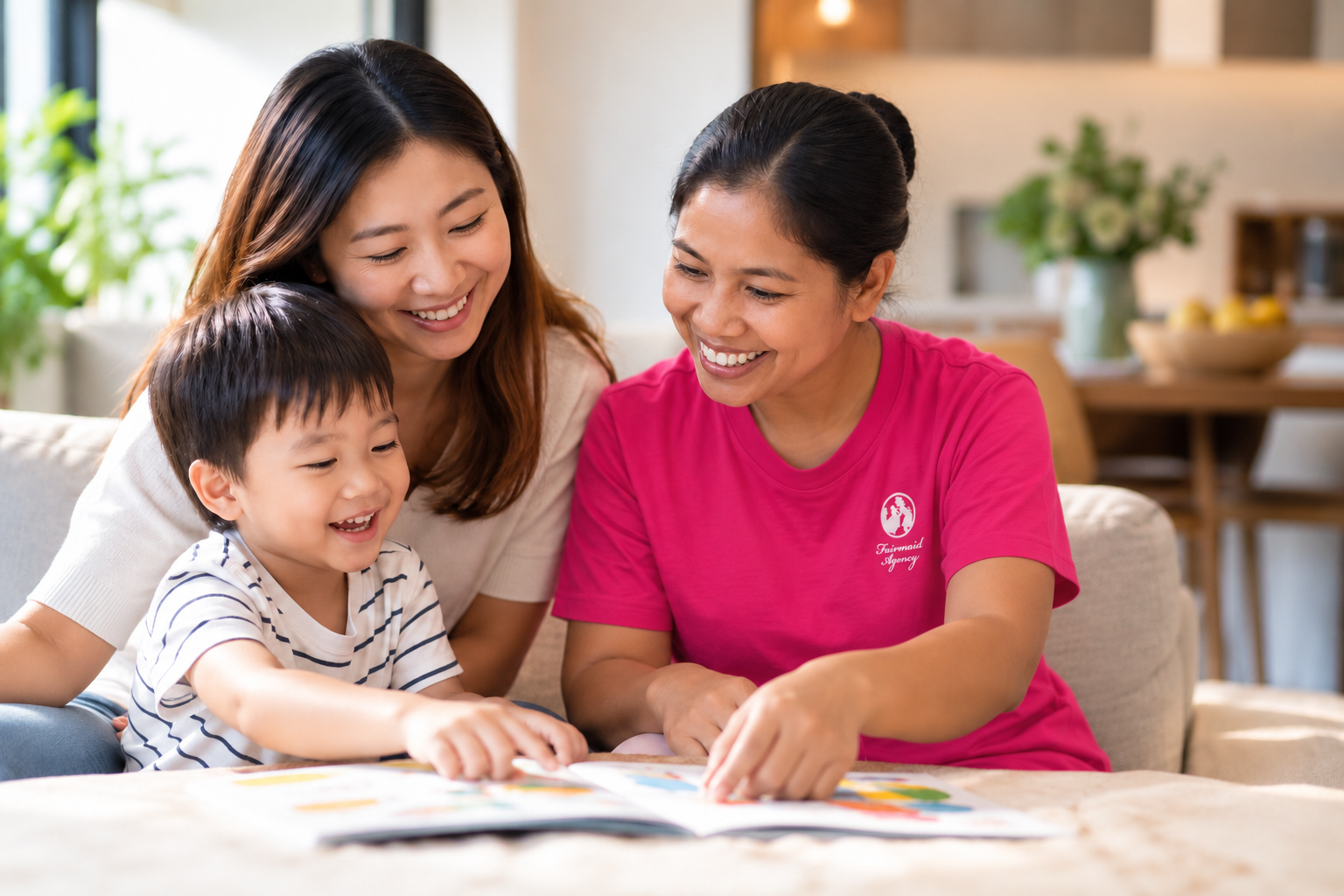
Finding a domestic helper is a big decision for any family.
You are not simply looking for someone who knows how to clean, cook or look after children. You are welcoming someone into your home.
She will become part of your family's daily routine, share your space and, depending on your needs, take care of the people who matter most to you.
So when families ask us how to choose the right domestic helper, our answer is always the same.
Start with your family.

Before looking through biodata or thinking about nationality, think about what your household actually needs.
Do you have young children who need to be cared for while you are at work?
Do you have elderly parents at home?
Is cooking an important part of your family's routine?
Perhaps you need someone who is experienced in managing a busy household, or someone who is patient and comfortable around young children.
Every family is different. There is no single type of domestic helper who is right for everyone. Experience matters, but the right experience matters more.
A helper might have several years of experience, but what did those years actually involve?
Someone who has spent years caring for young children might be a wonderful fit for a family with a baby.
Another helper might have extensive experience caring for elderly employers. Someone else might be confident with cooking and managing a larger household.
This is why it is worth looking beyond the number of years on a biodata.
Ask about what she actually did in her previous employment.
What were her daily responsibilities?
Who did she care for?
What kind of cooking did she do?
Was she responsible for children, elderly family members or the entire household?
The answers give you a much clearer picture of whether her experience fits your family's needs. Communication is another part of the picture.
A good employer-helper relationship needs clear communication from both sides.
You need to be able to explain how things are done in your home.
Your helper needs to feel comfortable asking questions when she is unsure about something. Small misunderstandings are easier to resolve when both sides feel comfortable speaking openly.
Think about the language your family speaks at home and whether the helper is comfortable communicating with you and your family members.
During an interview, pay attention to the conversation.
Does she understand your questions?
Does she ask questions about your household?
Does she seem comfortable discussing the responsibilities?
An interview should not feel like an interrogation. It is a conversation between two sides trying to understand whether the arrangement is going to work.
Your household routine matters too. Some homes are quiet and structured. Others are busy from morning until night.
Some families have children coming and going throughout the day. Others have elderly parents who need regular assistance.
Think about a typical day in your home.
What time does everyone wake up?
Who prepares breakfast?
Who gets the children ready for school?
When is dinner prepared?
What happens on weekends?
Are there pets?
Does your family have specific routines around meals or housekeeping?
These details might seem small, but they give an agency and a helper a much better understanding of what life in your household will actually be like.
It is also important to be honest about your expectations.
If you have three children, say so.
If your elderly parent needs assistance, explain what is involved.
If cooking is important to your family, talk about the type of food you eat.
If your home is large or there are several people living together, make sure the helper understands this before she agrees to the position.
Trying to make a household sound easier than it is does not help anyone. Being honest from the beginning gives both the family and the helper a fair opportunity to decide whether the arrangement feels right.
And then there is personality. This is something families sometimes overlook when choosing a domestic helper.
Skills and experience are important, but so is the way people interact with each other.
A helper who is comfortable in one household might not necessarily be the right fit for another.
Likewise, a family might have a wonderful experience with one helper but find that a completely different personality suits their household better the next time.
There is no perfect personality. What matters is compatibility.
At Fairmaid, this is one of the reasons we look beyond the usual checklist when helping families find a domestic helper.
Fairmaid uses SymbioSync, a personality-based matching system, as part of its approach to understanding compatibility between employers and helpers.
The aim is to look at the person behind the biodata and consider whether the personalities and expectations of both sides are likely to work well together.
Because sometimes the question is not whether someone is a good helper. The question is whether she is the right helper for your family.
Nationality is another factor families often consider.
Fairmaid works with Filipino, Indonesian and Myanmar domestic helpers, and each group has families who choose them for different reasons. But nationality alone does not tell you whether someone will be a good fit for your household.
Two helpers from the same country can have completely different personalities, experiences, skills and expectations. Look at the individual.
What has she done before?
What does she enjoy?
What type of household has she worked in?
What responsibilities is she comfortable with? What are her expectations?
These questions tell you far more than nationality alone.
If you are hiring someone to care for your children, take the time to understand her childcare experience.
If you are looking for someone to care for an elderly parent, ask about her previous experience with elderly care and the level of support she provided.
If cooking is one of the main reasons you are hiring a helper, talk about the food your family eats. Do not assume that someone who says she can cook will automatically be familiar with the dishes your family enjoys.
Be specific. The more specific you are, the easier it becomes to find a suitable match. It is also worth remembering that the interview works both ways.
While you are deciding whether a helper is right for your family, she is also deciding whether your household is right for her.
Give her the opportunity to ask questions.
Tell her what a normal day looks like.
Explain the main responsibilities.
Be clear about the people she will be caring for and the routines she will be expected to follow.
A good match starts with both sides knowing what they are getting into.
At Fairmaid, we have been helping Singapore families with their domestic helper needs since 1988. Over the years, we have learned that finding a suitable helper is about listening carefully to what each family actually needs.
There is no one-size-fits-all answer.
One family might need an experienced caregiver for an elderly parent. Another might need someone who is confident with young children. Another might place greater importance on cooking, housekeeping or simply finding someone whose personality fits naturally into the household.
That is why we believe the conversation should always start with your family.
Tell us about your home, what you need help with and most importantly what matters to you.
From there, we can help you look at suitable candidates and find a domestic helper who fits your household as a whole, not simply someone who looks good on paper.
Choosing a domestic helper is an important decision. Take the time to find the right person for your family.